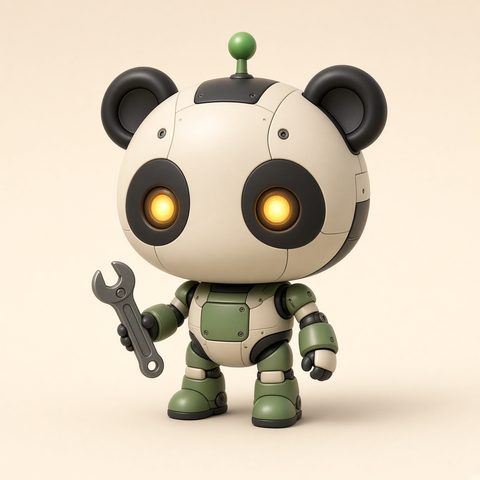
Choose a public mold when an existing robot body can test your brand, character, voice, language or market. Choose a custom mold when a new physical shape or structure is essential to the product. Tecpan offers one customized public-mold desktop AI robot for $500 in 4 weeks; fully new custom development starts at $10,000+, with a working prototype 4 weeks after requirements are fully confirmed. Production-tooling price and schedule are project-specific.
| Key facts: public mold versus custom development | ||
|---|---|---|
| Decision factor | Public-mold base | New/custom design |
| Body shape | Existing | Designed for your product |
| Exclusivity | Others may use the same base | Can be unique, subject to agreed IP and tooling terms |
| Tecpan entry offer | $500, one unit | From $10,000+ |
| Tecpan first milestone | Custom sample in 4 weeks | Working prototype 4 weeks after full confirmation |
| Best initial question | Will users want this experience and positioning? | Can this new hardware work and be manufactured? |
What is a public mold in China’s hardware supply chain?
A public mold (公模) generally refers to an existing product design and tooling available for multiple brands or buyers to use. In the desktop-robot market, the base body and core hardware may already exist through wholesale channels. A founder can then concentrate on differentiation that does not require rebuilding the enclosure.
“Public” does not mean that every design or brand asset is free of intellectual-property rights, nor that every supplier offers the same configuration. Check the actual product, agreement and permitted customization. It describes a manufacturing starting point, not a blanket legal conclusion.
What is a custom or private mold?
A custom or private mold is created for a specific product design. It can embody a unique enclosure, interface and assembly strategy. Before making it, the team normally needs industrial design, mechanical engineering, prototype validation and design-for-manufacturing work.
The mold is only one part of the program. Electronics, moving mechanisms, firmware, testing, fixtures and packaging may also need development. Agree in writing who owns the mold, where it is kept, whether it can be transferred and how maintenance is handled. Tecpan’s specific ownership terms are [to be confirmed].
Which customizations are possible without a new mold?
That depends on the base. At Tecpan, the $500 sample has a precise scope: one existing public-mold desktop AI robot with your choice of name, voice, personality, language and packaging box. The body shape stays the same.
Do not infer that this price includes a new color tool, structural changes, different sensors or custom electronics. If your requirement changes the hardware, describe it in the brief so it can be routed to the appropriate development scope.
When is a public mold the sensible first step?
It can fit when the uncertain part of your business is not the enclosure. You might be testing whether children respond to a character, whether a niche language experience matters, whether investors understand the concept, or whether your audience will pre-order a branded companion.
A real unit can make those conversations concrete. It can also reveal that users care about a function you had not prioritized. That learning may change the eventual custom design—or show that you do not need one yet.
When is a custom mold worth considering?
Consider it when the physical product is the differentiator: a new interaction requires a particular geometry, the mechanism cannot fit an existing body, or exclusive appearance is central to the business. It also becomes relevant when production-intent parts must be manufactured consistently after prototyping.
This route requires more than a visual render. Define acceptance tests, materials, assembly access and interfaces before committing to irreversible tooling. Protect the idea before disclosure; Tecpan offers NDA-first discussion and Chinese patent filing support.
How should you compare cost without inventing a mold budget?
Ask for separate prices for design and engineering, prototype parts, molds, trial shots, modifications, assembly, testing and packaging. A single “mold cost” does not describe the whole development project.
For general context, Protolabs publishes mold pricing starting around $1,495, while Hubs’ guide ranges from roughly $2,000–$5,000 for simple lower-run molds to $100,000+ for complex production molds. These are published industry examples from other suppliers—not Tecpan quotes, and not a prediction of your robot’s tooling cost.
How do timing and iteration differ?
Existing tooling removes the need to create a new enclosure tool before the first sample. Custom hardware introduces design and validation loops before and after tooling. Tecpan’s 4-week new-product milestone is specifically a working prototype after full requirements confirmation, not finished mass production.
Tooling and mass-production timelines remain [X weeks, to be confirmed]. The development timeline guide explains why a prototype and a repeatable production process are different milestones.
Can you start public and move to custom later?
Yes, if that matches your learning plan. Tecpan presents three neutral options: a $500 sample, 50–100-unit small-batch OEM on a proven design, or fully new development from $10,000+. You may test and stop, continue OEM, or pursue new hardware. There is no obligation to move upward.
Keep evidence from the first stage: user feedback, demo results, required functions and design constraints. It makes the next brief better regardless of which option you select. Our in-house prototype case study shows the documentation approach.
Which decision mistakes should a first-time founder avoid?
Do not choose a public mold solely because it is cheaper if the product cannot demonstrate its core value in that body. Conversely, do not commission a new enclosure merely to feel ownership when users have not yet validated the experience. Match the physical investment to the uncertainty you need to remove.
Also avoid treating a render as proof of manufacturability, or assuming an existing base automatically includes every electronic function shown in a supplier catalog. Define the exact sample configuration, test it, and document what remains undecided.
Finally, do not choose on unit price alone. Compare development cash, revision risk, exclusivity, production repeatability and whether the route produces evidence useful for your next decision.
Where do the published tooling figures come from?
See Protolabs — Injection Molding Services and Hubs — Injection Molding Guide. These references support only the industry-general tooling discussion. Tecpan-specific offers are separately identified throughout this guide.
Frequently asked questions
Does a public mold mean the product is generic?
The base body is shared, but the product experience can still be differentiated. Tecpan’s sample specifically customizes name, voice, personality, language and packaging.
Does Tecpan’s $500 sample include a new mold?
No. It is one unit on an existing public-mold desktop AI robot. New molds belong to a separately scoped custom-development project.
Is a custom mold automatically owned by the customer?
Not automatically. Ownership, storage, maintenance and transfer should be written into the agreement. Tecpan’s specific terms are [to be confirmed].
Can a public-mold sample become a small batch?
Yes, one neutral next step is Tecpan’s 50–100-unit Small-Batch OEM on a proven base design, priced on quote.
Which route is fastest to a physical unit?
An existing public-mold route usually removes new enclosure tooling. Tecpan confirms 4 weeks for its custom sample; other project schedules depend on scope.
This guide is general information, not legal or financial advice. Specific terms, prices and timelines are confirmed per project.