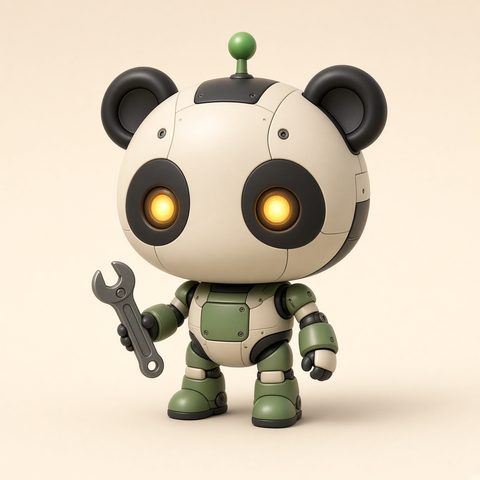
A custom AI robot prototype can mean anything from personalizing an existing public-mold desktop robot to developing new industrial design, electronics and tooling. At Tecpan, one customized public-mold unit is $500, while fully new custom product development starts at $10,000+. Those are Tecpan’s offers—not industry-wide price estimates. For new hardware, get a scope-based quote that separates engineering, prototype parts, tooling, testing and shipping.
| Key facts: two meanings of “custom prototype” | ||
|---|---|---|
| Question | Existing public-mold robot | Fully new robot |
| What changes? | Name, voice, personality, language and packaging at Tecpan | Industrial design, molds, electronics and AI |
| Tecpan starting price | $500 for one unit | From $10,000+ |
| Tecpan prototype timing | 4 weeks | 4 weeks after requirements are fully confirmed |
| Main cost risk | Expecting physical changes that the existing body does not include | Scope changes, engineering iterations, tooling and validation |
What does “custom AI robot prototype” actually mean?
The word custom hides the biggest pricing decision. A founder may want a robot with a unique character, name and voice. Another may need a new mechanism, enclosure, sensor layout and circuit board. Both can reasonably call the result a custom robot, but the work involved is not comparable.
Start by dividing the product into the experience layer and the hardware layer. The experience layer includes identity, language, voice, personality, software behavior and packaging. The hardware layer includes shape, structure, materials, moving parts, electronics and thermal design. If your innovation lives mainly in the experience, an existing body may test the idea without a new tooling program. If the physical product itself is the innovation, budget for product development rather than treating it as a branded sample.
Write one sentence describing what must be demonstrably different when a user sees and uses the prototype. That sentence gives a manufacturing partner a much better starting point than “How much for a custom robot?”
Which cost categories should a prototype quote separate?
A useful quote shows what you are buying. For a new product, ask whether these items are included, excluded or still to be scoped:
- Product definition and industrial design: user requirements, appearance, ergonomics and enclosure architecture.
- Mechanical and electronics engineering: structure, CAD, design-for-manufacturing review, boards, wiring and component selection.
- Software and AI integration: the chosen compute platform, voice or vision modules, firmware and the behavior being demonstrated.
- Prototype fabrication: printed, machined or molded parts, electronic assemblies, cables, fasteners and finishing.
- Assembly and functional testing: labor, fixtures, test time, rework and spare parts.
- Tooling: production molds, jigs and fixtures. Do not assume these are included in a prototype price.
- Compliance and market-specific testing: requirements depend on the product, radio, power system, materials and destination market. Obtain specialist advice and a test plan rather than guessing.
- Packaging, freight and import charges: these are separate from engineering and can change with destination and shipping method.
The objective is not to make every line item as cheap as possible. It is to reveal assumptions before money is committed. Two quotes with the same total can represent very different deliverables.
Why does a public-mold sample cost less than new hardware?
A public mold is an existing product design available through the supply chain. The physical base has already been designed and tooled. You are not funding that initial enclosure development again. At Tecpan, the $500 Custom Sample is exactly one desktop AI robot based on an existing public-mold design, customized with your name, voice, personality, language and packaging box. Its body shape stays the same.
This is a bounded deliverable, not a universal price for modifying any robot. A request for a different body, new electronics or a new mechanism belongs in fully new custom development. Our public-mold-versus-custom-mold guide explains the trade-off in more detail.
What do published tooling prices tell you—and not tell you?
Tooling is a separate manufacturing investment, not a dependable percentage of a prototype quote. Published examples show how wide the range is. Protolabs states that its injection-mold pricing starts around $1,495, varying with geometry and complexity. Hubs’ injection-molding guide describes simple, lower-volume molds around $2,000–$5,000 and highly complex production tooling reaching $100,000+. These are those suppliers’ general published examples, not Tecpan quotations and not predicted costs for your robot.
A robot may also need several molded parts, different surface finishes, sliders or multiple tools. CNC-machined or printed prototype parts can avoid immediate production tooling, but they answer different questions than molded production-intent parts. Ask what process the quoted prototype uses and what will have to change for a batch.
Which hidden costs most often surprise first-time founders?
The first prototype is rarely the last expense. Leave room for a second iteration after users touch the product. Component minimum purchases can exceed the quantity needed for one unit; fixtures and testing can be necessary even for a small run; packaging inserts and labels may need their own setup; certification, freight, insurance, duties and local taxes can sit outside the factory quote.
Also price your own time. Slow decisions on voice, design, packaging or target market can create rework. A clear brief and a single decision-maker are real budget controls.
How can you compare quotes without choosing on price alone?
Give every potential partner the same brief and ask for the same breakdown. Compare the number of units, materials and processes, included revisions, testing, source-file deliverables, tooling ownership, shipping terms and payment milestones. Tecpan’s exact tooling terms are [to be confirmed]; we do not imply terms that have not been agreed.
Protect the work before sending detailed files. Tecpan signs an NDA before project details are shared and can help with Chinese patent filing. A low quote that excludes critical testing or leaves ownership ambiguous may not be the lower-risk option.
What does Tecpan offer at each budget?
There are three neutral starting points. The $500 Custom Sample provides one public-mold desktop AI robot with the five listed personalizations in 4 weeks. Small-Batch OEM covers branded runs of 50–100 units on a proven base, priced on quote. Fully New Custom Product development starts at $10,000+, with a working prototype 4 weeks after requirements are fully confirmed. Tooling and mass-production schedules remain [to be confirmed per project].
You can also stop after testing. There is no required upgrade path. See our Tecpan prototype case study for the process, with concept renders and unconfirmed specifications clearly marked.
Where can you check the general cost assumptions?
Sources for the industry-general examples above: Protolabs — Injection Molding Services and Hubs — Injection Molding Guide. Both discuss general manufacturing economics; neither is a source for Tecpan pricing.
Frequently asked questions
Is $500 enough for any custom robot prototype?
No. Tecpan’s $500 offer is one existing public-mold desktop AI robot with custom name, voice, personality, language and packaging. New body shapes, electronics and mechanisms require custom development.
Does the prototype price include production molds?
Not unless a written quote explicitly includes them. Tecpan’s public-mold sample uses existing tooling; fully new development and production tooling must be scoped clearly.
Why is one prototype expensive per unit?
Engineering, setup, sourcing, assembly and testing do not scale down neatly to one unit. Fixed work is spread across very few parts.
Should you pay for tooling before testing the idea?
Not automatically. First decide what you need to learn. An existing public-mold sample may test character and positioning, while production-intent hardware eventually needs suitable tooling and validation.
Is international shipping included in Tecpan’s $500 sample?
Shipping is extra. Tecpan’s sample shipping cost and transit time are [to be confirmed] for the destination.
This guide is general information, not legal or financial advice. Specific terms, prices and timelines are confirmed per project.